
When families hear “physical therapy,” they often picture repetitive exercises or formal routines. In pediatric physical therapy, especially at Esperanza Children’s Therapy in Southern New Mexico, the experience looks very different. For children, physical therapy is built around movement, play, and confidence-building — all carefully designed to support how kids naturally learn and grow. Understanding what pediatric physical therapy actually involves can help caregivers feel more confident taking the next step.
How Physical Therapy Supports Child Development
Pediatric physical therapy focuses on how a child moves through their world. This includes strength, balance, coordination, posture, and endurance, skills that affect everything from playground play to classroom participation. Children may be referred to physical therapy for a variety of reasons, including:
- Delays in crawling, walking, or running
- Difficulty keeping up with peers during physical play
- Frequent falls or poor balance
- Recovery after injury, surgery, or a medical condition
Rather than isolating muscles or movements, pediatric physical therapy looks at the whole child and how their body works together during everyday tasks.
Why Play Is Central to Physical Therapy
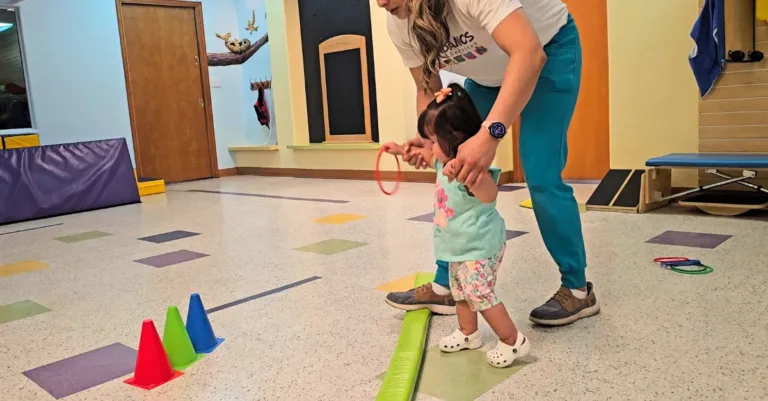
Children learn best through movement and exploration. That’s why pediatric physical therapy often looks like structured play rather than traditional exercise. Sessions may include climbing, swinging, jumping, balancing, or navigating obstacle courses. While these activities feel fun, each one is intentionally selected to target specific goals such as improving core strength, balance reactions, or coordination. By embedding therapy goals into play, children stay engaged, motivated, and more willing to challenge themselves — which leads to stronger outcomes over time.
What Families Can Expect During Therapy
Physical therapy at Esperanza begins with a thorough evaluation to understand a child’s strengths, challenges, and movement patterns. From there, the therapist develops a personalized plan that evolves as the child grows. Families can expect:
- Individualized, goal-focused therapy sessions
- Opportunities to observe and ask questions
- Guidance on how to support movement skills at home
Progress is measured by increased confidence, independence, and comfort with movement—not perfection.
When Physical Therapy May Be Helpful
Physical therapy can benefit children who struggle with coordination, balance, strength, or endurance — even if challenges seem subtle. Difficulty keeping up on the playground, avoiding physical play, or tiring quickly can all be signs that extra support may help. A physical therapy evaluation can provide clarity, reassurance, and guidance, whether therapy is recommended short-term or as ongoing support.
Partnering With Families for Long-Term Success
Physical therapy doesn’t stop when a session ends. Lasting progress happens when families feel empowered to support movement throughout the week. At Esperanza Children’s Therapy, our team works closely with caregivers to share strategies that fit naturally into everyday life. By building trust, consistency, and collaboration, therapy becomes part of a child’s routine — not an added burden.
Ready to Learn More About Physical Therapy for Your Child?
If you’re exploring physical therapy for children in Las Cruces or Anthony, Esperanza Children’s Therapy is here to support you. Our bilingual team provides individualized, play-based care in welcoming spaces designed for children and families. Call us at (575) 647-3773 or visit aitkids.com/esperanza to schedule an evaluation and learn how physical therapy can support your child’s movement and confidence.
Additional Resources
- American Physical Therapy Association (APTA) – https://pediatricapta.org
- HealthyChildren – HealthyChildren.org
 English
  Spanish