
Parents often notice small struggles in their child’s daily routine long before they think about therapy. These challenges may not always feel “big enough” to raise concern, but over time they can affect a child’s confidence, independence, and participation at home or school.
At Esperanza Children’s Therapy in Southern New Mexico, occupational therapy helps children build the skills they need to navigate everyday life more comfortably and successfully.
Below are four common signs occupational therapy may be helpful.
1. Daily Tasks Feel Harder Than They Should
If routine activities consistently lead to frustration, your child may need extra support developing foundational skills.
This can look like difficulty with:
- Dressing, buttoning, or using zippers
- Feeding themselves or managing utensils
- Brushing teeth or tolerating grooming tasks
Occupational therapy focuses on strengthening fine motor skills and helping children become more independent in self-care routines.
2. Sensory Experiences Cause Big Reactions
Some children have strong responses to sounds, textures, movement, or crowds. Sensory challenges aren’t about behavior—they’re about how the nervous system processes information.
You may notice your child:
- Avoids certain clothing, foods, or textures
- Becomes overwhelmed in noisy or busy environments
- Seeks constant movement, crashing, or spinning
- Has difficulty calming down after stimulation
Occupational therapists help children regulate sensory input so they can feel more comfortable and in control.
3. Focus and Transitions Are a Daily Struggle
Difficulty focusing, following routines, or transitioning between activities can impact learning and family routines.
OT can support children who:
- Have trouble staying seated or engaged
- Struggle moving from one activity to another
- Become easily frustrated when routines change
- Need support with organization or task completion
Therapy builds regulation skills that help children participate more successfully at home and in school.
4. School Tasks Are Challenging
Classroom expectations require coordination, endurance, and fine motor control. When these skills are difficult, children may avoid tasks or feel discouraged.
Signs may include:
- Difficulty holding a pencil or writing
- Fatigue during schoolwork
- Trouble cutting, coloring, or completing tabletop activities
- Avoidance of classroom tasks
Occupational therapy helps children develop the physical and regulatory skills needed for school participation and confidence.
How Occupational Therapy Supports the Whole Child
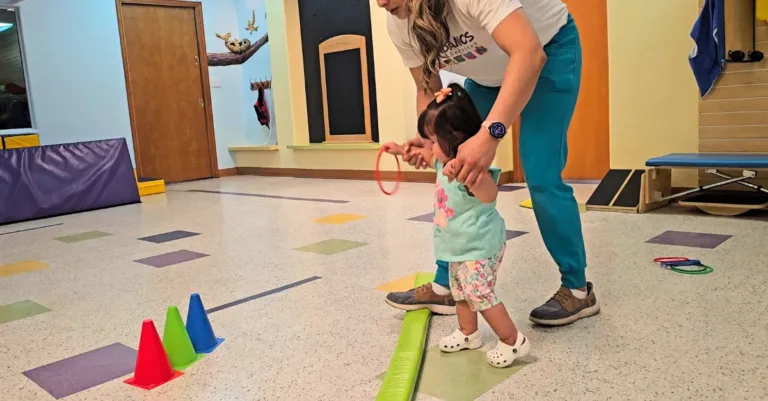
Occupational therapy isn’t about fixing one skill—it’s about helping children function more comfortably across environments. At Esperanza, therapy is play-based, individualized, and designed to support each child’s unique strengths and needs.
Families are encouraged to observe sessions and learn strategies that fit naturally into daily life, so progress continues outside the clinic.
Ready to Learn More About Occupational Therapy?
If you’re noticing challenges with daily routines, sensory processing, or school participation, Esperanza Children’s Therapy is here to help. Our bilingual occupational therapists support children across Las Cruces, Anthony, and surrounding Southern New Mexico communities.
Call us at (575) 647-3773 or visit aitkids.com/esperanza to schedule an evaluation and learn whether occupational therapy may be right for your child.
Additional Resources
- American Occupational Therapy Association (AOTA) – https://www.aota.org/about/what-is-ot
- Understood.org – Occupational Therapy – https://www.understood.org/en/articles/occupational-therapy-motor-skills-help
 English
  Spanish